A leaking pipe can turn into expensive water damage surprisingly quickly. Knowing what to do when a pipe starts leaking can help you protect your home, limit the mess, and determine whether you can handle the problem temporarily or need a plumber.
Here are seven steps to take.
1. Shut Off the Water
Your first priority is stopping the flow of water.
If the leaking pipe has its own shutoff valve, close it. Otherwise, locate your home’s main water shutoff valve and turn off the water supply.
Every homeowner should know where this valve is before a plumbing emergency happens.
2. Turn Off Electricity If Water Is Near Electrical Components
Water and electricity are a dangerous combination.
If the leak is near outlets, wiring, appliances, an electrical panel, or other electrical equipment, don’t enter standing water or touch electrical components.
If you can safely shut off power to the affected area without approaching the water, do so. If you cannot safely reach the electrical controls, stay clear and get professional help.
3. Open a Faucet to Relieve Pressure
After shutting off the water supply, open a nearby faucet.
This can relieve pressure and allow some remaining water in the plumbing system to drain instead of continuing to escape through the damaged area.
4. Catch and Remove the Water
Place a bucket, pan, or other container beneath the leak if you can do so safely.
Use towels or a wet/dry vacuum to remove water from floors and other surfaces. Move furniture, rugs, boxes, and other belongings away from the affected area.
The pipe may be inexpensive to repair. Damage caused by the water can be far more costly.
5. Identify Where the Water Is Coming From
Look carefully at the source.
Is water coming from a pipe joint? A small crack? A loose connection? A damaged supply line? Or is water simply appearing on a wall or ceiling?
Water can travel along pipes, framing, and other surfaces before becoming visible. The place where you see water isn’t always where the leak started.
6. Treat Temporary Repairs as Temporary
Pipe repair tape, clamps, and other temporary measures may help control certain minor leaks until a permanent repair can be made.
But don’t confuse stopping visible water with solving the underlying plumbing problem.
Corrosion, damaged fittings, freezing, excessive water pressure, or deteriorated pipes can indicate a larger issue.
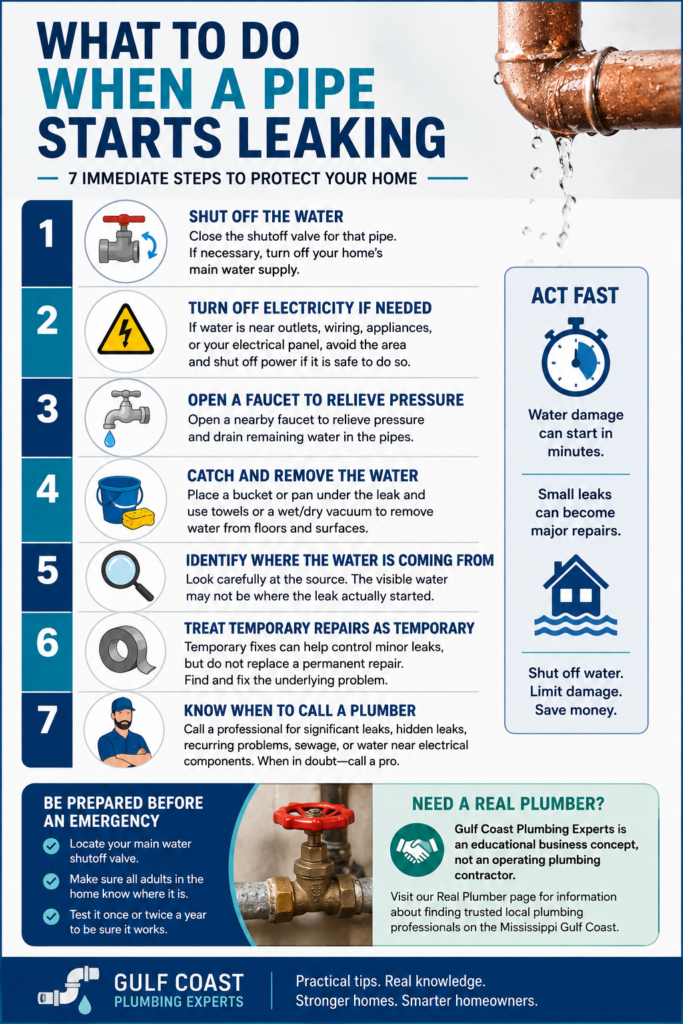
7. Know When to Call a Plumber
Call a professional when the leak is significant, you cannot locate its source, the damaged pipe is inside a wall or ceiling, the problem keeps returning, or you aren’t comfortable making the repair yourself.
A burst pipe, rapidly spreading water, sewage, or water near electrical equipment should be treated much more seriously than an occasional drip.
Need a Real Plumber?
Gulf Coast Plumbing Experts is an educational business concept, not an operating plumbing contractor. We don’t accept plumbing service calls.
If you’re on the Mississippi Gulf Coast and need professional plumbing work, visit our Real Plumber page for information about finding actual local plumbing professionals.
The Most Important Step Happens Before the Leak
Now that you know what to do when a pipe starts leaking, take five minutes to locate your home’s main water shutoff valve.
Make sure other adults in the household know where it is and how to operate it.
When water is pouring onto the floor, that’s not the ideal time to start looking for the valve.
Knowing how to shut off your water may be one of the simplest ways to prevent a small plumbing problem from becoming a major home repair.