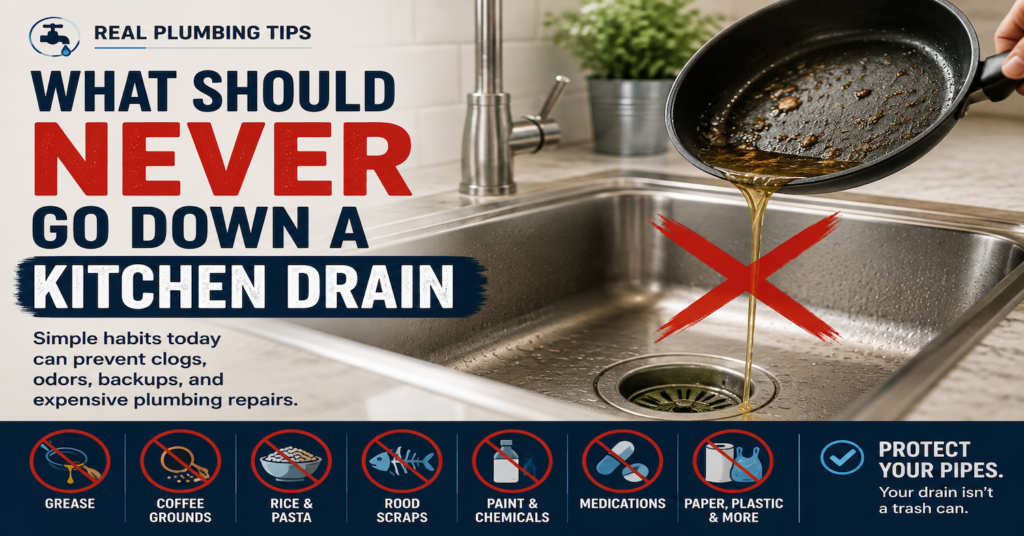
Your kitchen drain handles plenty of water every day, but it isn’t designed to dispose of everything left over from cooking and cleaning.
Knowing what should never go down a kitchen drain can help prevent slow drains, unpleasant odors, backups, and expensive plumbing repairs.
A garbage disposal doesn’t change that rule. It can grind certain food scraps into smaller pieces, but those materials still have to travel through your plumbing.
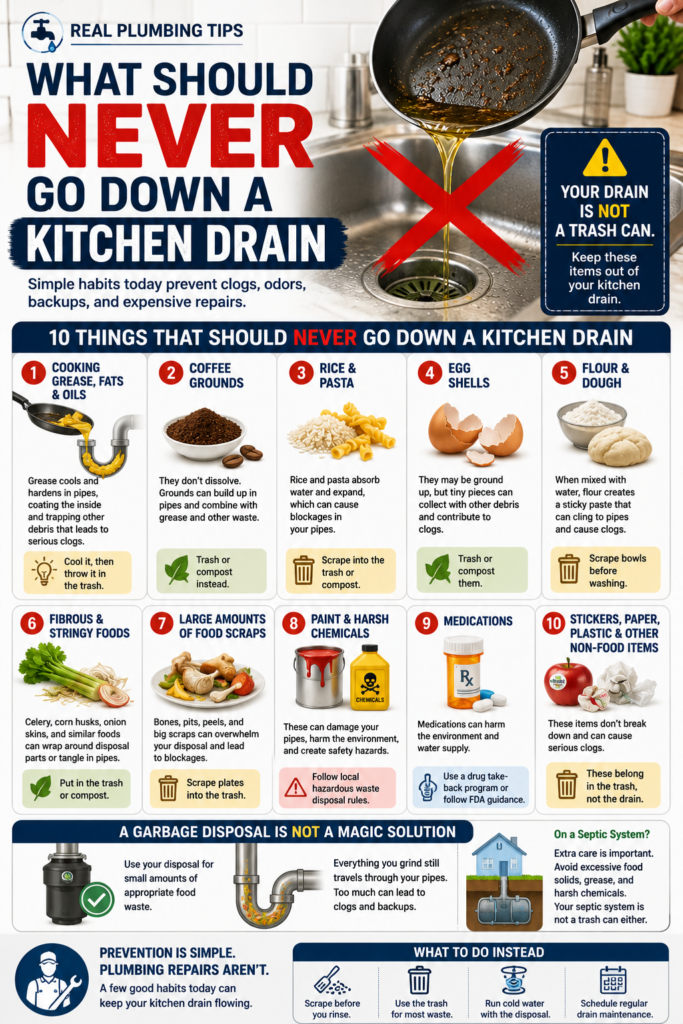
Here are 10 things that are better kept out of the drain.
1. Cooking Grease, Fats, and Oils
Cooking grease is one of the most important things to keep out of a kitchen drain.
Hot grease may look harmless because it pours like a liquid. The problem can develop after it travels farther into the plumbing and begins to cool.
Fats and oils can coat the inside of pipes and combine with other debris, contributing to increasingly stubborn restrictions and clogs.
Instead, allow grease to cool and dispose of it appropriately in the trash according to local waste guidelines.
2. Coffee Grounds
Coffee grounds are small, but that doesn’t make them drain-friendly.
They don’t simply disappear after entering the plumbing. Grounds can collect in pipes and combine with grease and other material.
Put used coffee grounds in the trash or compost them when appropriate.
3. Rice and Pasta
Rice and pasta absorb water.
That characteristic makes them particularly poor candidates for the kitchen drain. Pieces that remain in the plumbing can swell and contribute to a blockage.
Scrape leftover rice and pasta into the trash or compost rather than rinsing large quantities down the sink.
4. Eggshells
A garbage disposal may grind eggshells into small pieces, but that doesn’t mean those pieces belong in your drain.
Small particles can become part of the mixture of food, grease, and debris accumulating inside plumbing.
Dispose of eggshells in the trash or compost them where appropriate.
5. Flour and Dough
Think about what happens when flour and water are mixed together.
They don’t become easier to wash away. They become sticky.
Large quantities of flour, batter, and dough can create a paste-like material that you don’t want accumulating inside a drainpipe.
Scrape bowls and work surfaces before washing them.
6. Fibrous and Stringy Foods
Celery, corn husks, onion skins, asparagus, and other fibrous materials can cause problems, particularly with garbage disposals.
Long fibers may wrap around disposal components instead of breaking apart cleanly.
The better approach is simple: put fibrous food waste in the trash or compost rather than asking the disposal to handle it.
7. Large Amounts of Food Scraps
A garbage disposal is useful, but it isn’t a substitute for a garbage can.
Bones, fruit pits, large vegetable pieces, and substantial quantities of leftovers should not be pushed into the disposal simply because the motor is capable of running.
Scrape plates before rinsing them.
The less solid material you intentionally send through your plumbing, the less opportunity there is for that material to contribute to a blockage.
8. Paint and Harsh Chemicals
The kitchen sink shouldn’t be used as a disposal system for leftover paint, solvents, automotive fluids, pesticides, or other potentially hazardous chemicals.
These substances can create safety and environmental concerns in addition to possible plumbing problems.
Follow the product label and your local government’s household hazardous-waste instructions for proper disposal.
Never mix chemicals in an attempt to dispose of them.
9. Medications
Unused or expired medications shouldn’t routinely be washed down the kitchen drain.
The preferred disposal method can depend on the medication. Drug take-back programs are available in many communities, and specific disposal instructions may be provided with the medicine.
Follow current FDA or local disposal guidance rather than automatically putting medication into the plumbing system.
10. Stickers, Paper, Plastic, and Other Non-Food Items
Those little produce stickers are easy to overlook.
Remove them before washing fruits and vegetables.
Paper towels, food wrappers, plastic pieces, twist ties, packaging, and other non-food materials also belong in the trash—not the garbage disposal.
If it isn’t something your plumbing system was designed to carry, don’t use the drain to get rid of it.
A Garbage Disposal Doesn’t Make Everything Safe
One of the easiest mistakes to make is assuming:
“If the garbage disposal can grind it, it can go down the drain.”
Those are two different questions.
The disposal’s job is to grind certain food waste. Afterward, that material still has to move through your drainpipes and the rest of the wastewater system.
Use the disposal for small amounts of appropriate food residue rather than as a substitute for scraping plates into the trash.
What About Homes With Septic Systems?
If your home uses a septic system, what enters the drain deserves additional consideration.
Everything you send through the kitchen sink ultimately becomes part of the wastewater your septic system must handle.
Avoid excessive food solids, grease, harsh chemicals, and other materials that don’t belong in household wastewater.
Your septic system isn’t a garbage disposal system either.
What If You Already Have a Slow Kitchen Drain?
A slow drain may be an early indication that material is beginning to restrict the pipe.
Don’t keep sending grease and food debris through it while hoping the problem disappears.
If you have a garbage disposal, first make sure the problem isn’t simply related to its operation. If the drain repeatedly slows, backs up, smells unusual, or affects other fixtures, the plumbing may need professional attention.
Be especially cautious with chemical drain cleaners. Products vary, and improper use can create safety risks or damage certain plumbing components. Follow product and plumbing-system guidance carefully rather than repeatedly pouring chemicals into a persistent clog.
Need a Real Plumber?
Gulf Coast Plumbing Experts is an educational business concept, not an operating plumbing contractor. We don’t accept plumbing service calls.
If you’re on the Mississippi Gulf Coast and have a kitchen drain that won’t clear or repeatedly backs up, visit our Real Plumber page for information about finding actual local plumbing professionals.
Your Drain Isn’t a Trash Can
The easiest kitchen drain clog to fix is the one you never create.
Remembering what should never go down a kitchen drain doesn’t require complicated plumbing knowledge.
Keep grease, coffee grounds, expandable foods, excessive food scraps, chemicals, medications, and non-food materials out of the sink. Scrape plates before rinsing them and use your garbage disposal for its intended purpose.
A few seconds of prevention after each meal can help keep your kitchen plumbing flowing for years.